Saturday, October 3, 2009

Iran Talks Held In Geneva On Nuclear Program Read more at: http://www.huffingtonpost.com/2009/10/01/iran-talks-held-in-geneva_n_305968.html

GENTHOD, Switzerland — Iran and six world powers put nuclear talks back on track Thursday at a landmark session that included the highest-level bilateral contact with the U.S. in years and a pledge to meet again this month. President Barack Obama then challenged Tehran to make good on its promises quickly.
Iran also agreed to allow U.N. inspectors into its covertly built enrichment plant during the talks, held at a villa outside Geneva. The discussions appeared to defuse tensions that had been building for weeks.
Speaking in Washington, Obama called the talks "a constructive beginning" and said Iran must match its words with action.
Tehran "must grant unfettered access" to international inspectors within two weeks, he said, warning that if Iran fails to follow through, "then the United States will not continue to negotiate indefinitely and we are prepared to move towards increased pressure."
"Our patience is not unlimited," Obama said. "Going forward, we expect to see swift action."
The tone of Thursday's meeting was considerably more positive than just a week ago, when the U.S. and its allies were threatening Iran with tough new sanctions if it refused to freeze its nuclear activities, which they suspect are aimed at creating an atomic weapon.
Perhaps the most significant development of the day was a 45-minute one-on-one meeting between U.S. Under Secretary of State William Burns and Iran's senior nuclear negotiator, Saaed Jalili. It was the first direct U.S. negotiations with Iran since Washington severed relations in 1980.
The encounter appeared to add to the positive atmosphere that led to agreement by all the parties – Iran, the U.S., Britain, France, Russia, China and Germany – for a follow-up meeting this month.
Story continues below
It also appeared to be concrete proof of Obama's commitment to engage Iran directly on nuclear and other issues – a sharp break from policy under the Bush administration.
However, statements made by the two sides reflected the continuing divide between them.
U.S. Deputy State Department spokesman Robert Wood said Burns used the meeting with Jalili "to reiterate the international community's concerns about Iran's nuclear program."
"He addressed the need for Iran to take concrete and practical steps that ... will build international confidence in the exclusively peaceful nature of its program," he said.
Wood said both sides also "had a frank exchange on other issues, including human rights." Officials in Washington said Burns urged Tehran to resolve the cases of three Americans detained in Iran since July.
Javier Solana, the European Union's foreign policy chief, told reporters Iran agreed to "cooperate fully" with the International Atomic Energy Agency and to open its newly disclosed nuclear facility to inspectors, probably within "a couple of weeks."
In a statement, the IAEA said agency chief Mohamed ElBaradei had been invited to Iran to discuss nuclear issues. A senior U.S. official said elBaradei would travel to Tehran this weekend. He spoke on condition of anonymity because his information was confidential.
ElBaradei recently said Tehran was "on the wrong side of the law" over its new enrichment plant near the Shiite holy city of Qom. He said Iran should have revealed its plans as soon as it decided to build the facility.
Western officials said Iran also agreed to send some of its enriched uranium to Russia to further process the material for use in a research reactor in Tehran. It was a long-sought compromise because Iran has repeatedly refused to involve an outside country, insisting it has the right to a full domestic enrichment program.
Obama said such a step would help build international confidence.
"We support Iran's right to peaceful nuclear power," Obama said. "Taking the step of transferring its low-enriched uranium to a third country would be a step toward building confidence that Iran's program is in fact peaceful."
Still, questions remained over the way forward.
The six powers remain committed to seeking a full freeze of Tehran's nuclear activities, but Iran could argue that the agreement amounted to an acknowledgment of its right to enrich uranium.
Curbing Iran's ability to enrich uranium is a key international goal, because the process can produce both fuel for nuclear reactors and weapons-grade uranium for warheads.
The differences reflected the likelihood of huge bumps ahead in any future talks.
Secretary of State Hillary Rodham Clinton, speaking in Washington, sounded a pragmatic note. "Today's meeting opened the door, but let's see what happens," she said.
Iran's refusal to freeze its enrichment activities has already prompted three sets of U.N. Security Council sanctions.
Iran came to the talks with a proposal that ignored the key demand that it freeze enrichment. Instead it offered to hold "comprehensive, all-encompassing and constructive" discussions on a range of security issues, including global nuclear disarmament.
Reiterating calls by President Mahmoud Ahmadinejad, the Iranian offer linked any talks with a discussion of Middle East tensions "to help the people of Palestine achieve all-embracing peace."
It called for "reform" of the U.N. Security Council – shorthand for curbing the authority of the U.S. and the four other permanent council members. The only link to the arms issue was a call for discussion of disarmament by the world's nuclear powers.
Jalili told reporters that while those issues were key, Thursday's discussions were "good talks" compared to the last seven-nation meeting 15 months ago that broke up in failure.
At the United Nations, Iranian Foreign Minister Manouchehr Mottaki suggested the talks could be expanded to the "summit" level. He said Iran was willing to discuss a variety of security, economic and political issues, although he did not specifically refer to nuclear issues.
__
Associated Press writers Alexander G. Higgins, Bradley S. Klapper and Scheherezade Faramarzi in Geneva, John Heilprin at the United Nations, and Robert Burns in Washington contributed to this report.

Thursday, October 1, 2009

Obama's French Lesson

outstretched hand. But what did the international community gain from these offers of dialogue? Nothing."
This Story
-- French President Nicolas Sarkozy, Sept. 24


When France chides you for appeasement, you know you're scraping bottom. Just how low we've sunk was demonstrated by the Obama administration's satisfaction when Russia's president said of Iran, after meeting President Obama at the United Nations, that "sanctions are seldom productive, but they are sometimes inevitable."
You see? The Obama magic. Engagement works. Russia is on board. Except that, as The Post inconveniently pointed out, President Dmitry Medvedev said the same thing a week earlier, and the real power in Russia, Vladimir Putin, had changed not at all in his opposition to additional sanctions. And just to make things clear, when Iran then brazenly test-fired offensive missiles, Russia reacted by declaring that this newest provocation did not warrant the imposition of tougher sanctions.
Do the tally. In return for selling out Poland and the Czech Republic by unilaterally abrogating a missile-defense security arrangement that Russia had demanded be abrogated, we get from Russia . . . what? An oblique hint, of possible support, for unspecified sanctions, grudgingly offered and of dubious authority -- and, in any case, leading nowhere because the Chinese have remained resolute against any Security Council sanctions.
ad_icon
Confusing ends and means, the Obama administration strives mightily for shows of allied unity, good feeling and pious concern about Iran's nuclear program -- whereas the real objective is stopping that program. This feel-good posturing is worse than useless, because all the time spent achieving gestures is precious time granted Iran to finish its race to acquire the bomb.
Don't take it from me. Take it from Sarkozy, who could not conceal his astonishment at Obama's naivete. On Sept. 24, Obama ostentatiously presided over the Security Council. With 14 heads of state (or government) at the table, with an American president at the chair for the first time ever, with every news camera in the world trained on the meeting, it would garner unprecedented worldwide attention.
Unknown to the world, Obama had in his pocket explosive revelations about an illegal uranium enrichment facility that the Iranians had been hiding near Qom. The French and the British were urging him to use this most dramatic of settings to stun the world with the revelation and to call for immediate action.
Obama refused. Not only did he say nothing about it, but, reports Le Monde, Sarkozy was forced to scrap the Qom section of his speech. Obama held the news until a day later -- in Pittsburgh. I've got nothing against Pittsburgh (site of the G-20 summit), but a stacked-with-world-leaders Security Council chamber it is not.
Why forgo the opportunity? Because Obama wanted the Security Council meeting to be about his own dream of a nuclear-free world. The president, reports the New York Times citing "White House officials," did not want to "dilute" his disarmament resolution "by diverting to Iran."

Iran-US Negotiation The English Version of the Statement


Over the past century, the U.S relationship with Iran has been volatile, and the coming months may prove to be a decisive era in the history of the relationship between the two countries. A misreading of the situation in Iran might lead to decisions which will damage the national interests of both countries.

The harsh repression of peaceful protests in the wake of the disputed Iranian election this past June removed any doubt about the cruelty of the Iranian totalitarian regime. Direct shots fired at unarmed civilians in Iran captured global attention, but this was only an example of the atrocities that were committed. Intensifying pressure on protesters, the use of Stalinist methods against detainees, and threatening university students and faculty are only few more examples of the continuing campaign against peaceful opposition in the weeks since the election.

Recent news indicates the US administration’s intention to negotiate with the Iranian government.  While maintaining an active venue of negotiation is necessary for resolving the conflict between the two countries, a constructive dialogue with Iran must address the Iranian regime’s recent brutalities.  Neglecting such atrocities by any country, particularly in this crucial period, would have a severe negative effect on the Iranian public.  As people with deep connections to their Iranian homeland, and who have studied and worked at universities across the world, the signers of this letter are concerned about the neglect of human rights violations in Iran by the rest of the world.  As the current regime faces an internal crisis of legitimacy, it is obvious that the goal of the Iranian government is not the resolution of its international conflicts.  Rather, they seek a false victory for their confrontational policies, which could be used as justification for escalating the violent crackdown against domestic political opposition.

From our point of view, the confrontational policies of the previous US administration, coupled with the use of double standard in dealing with issues of human rights, have had a negative impact on the public perception of the United States' intentions in the Middle East.  While we oppose any military threat against Iran, we remind American policy makers that turning a blind eye to human rights abuses, which began in 1953 with the coup against Mohammed Mosaddeq, has created suspicion within Iran about American intentions.  In our opinion, neglecting the recent atrocities in future negotiations with Iran would confirm this suspicion in the eyes of the Iranian people and would have a negative effect on long-term relations between the two countries.  We believe the issues of human rights violations and the Iranian government's atrocities against its own citizens are critical issues that should not be sacrificed for short term gains.  It is important to remember that the Iranian public is carefully following the interactions of foreign governments with those who violated their civil rights.


   1. Amir Aavani, PhD student, Simon Fraser University, Canada, Computer Science
   2. Arash Abazari, PhD student, Johns Hopkins University, Philosophy
   3. Ali Afshari, PhD student, George Washington University, System Engineering
   4. Mazda Ahmadi, PhD student, University of Texas at Austin, Computer Science, Championship of RoboCup Rescue Championship 2002 and 2003, Runner up position 2001
   5. Hamid Akbari, PhD student and Part time Faculty, York University, Canada, Strategic Management
   6. Kazem Alamdari, Adjunct Professor, California State University, Northridge, PhD Sociology
   7. Parviz Alivand, PhD student, University of Texas at Austin, Economics
   8. Khosrow Allaf-Akbari, PhD student, University of Maryland and Princeton University, Energy Policy Studies - Astronomy, Gold Medal of Iran's Collegiate Physics Olympics 2002
   9. Hamed Amini, PhD student, Ecole Normale Superieure, France, Applied Mathematics
  10. Kiarash Amiri, PhD student at Rice University, Electrical Engineering
  11. Amin Arbabian, PhD student, UC Berkeley, Electrical Engineering
  12. Soroush Aslani, PhD student, Kellogg School of Management, Northwestern University, Organizational Behavior
  13. Mitra Azizian, PhD student, Colorado School of Mines, Petroleum Engineering
  14. Roja Bandari, PhD student at UCLA, Electrical Engineering, National Science Foundation Graduate Fellow
  15. Anahita Basirat, PhD student, Gipsa-lab, Grenoble INP, France, Cognitive Science
  16. Arash Behboodi, PHD student, SUPELEC, France, Telecommunication
  17. Ahmad Beirami, PhD candidate, Electrical and Computer Engineering, Georgia Institute of Technology
  18. Mostafa Beshkar, Research Associate at Yale University and Assistant Professor at University of New Hampshire, PhD Economics
  19. Goodarz Danaei, Graduate student, Population and International Health
  20. Ehsan Ebrahimy, PhD student, University of Chicago, Economics, Gold Medal National Math Olympiad 1996
  21. Vahid Entezari, Postdoctoral Research Fellow at Center for Advanced Orthopedic Studies, Harvard Medical School, MD
  22. Behdad Esfahbod, MBA student, University of Toronto, Software Engineer, Red Hat, Computer Science and MBA, Silver Medal International Informatics Olympiad 1999, Gold Medal International Informatics Olympiad 2000
  23. Mehran Eslaminia, PhD student, North Carolina State University, Civil Engineering
  24. Sanli Faez, PhD student at University of Twente, Netherlands, Physics, Gold Medal National Physics Olympiad 1996
  25. Hassan Faghani, PhD Student, Washington University in St. Louis, Economics
  26. Azadeh Farahzadi, Postdoctoral Scientist, PhD Physics
  27. Babak Farzad, Assistant Professor, Brock University Canada, PhD Computer Science, Bronze Medal International Informatics Olympiad 1995
  28. Maryam Farboodi, PhD student, University of Chicago, Economics
  29. Roozbeh Foroozan, PhD student at Pennsylvania State University, Energy and Environmental Engineering
  30. Reza Ganjdanesh, PhD student, University of Texas at Austin, Petroleum Engineering
  31. Ali Ghodsi, Assistant Professor, University of Waterloo, PhD Computer Science
  32. Mohammadreza Ghodsi, PhD student, University of Maryland, Computer Science, RoboCup World Campion 2005
  33. Reza Golestani, PhD student, University Medical Center Groningen, Netherland, Nuclear Medicine
  34. Ali Gordjinejad, PhD student, Forschungszentrum Jülich, Physics
  35. Ahmad Reza Hadaegh, Associate Professor, California State University San Marcos, PhD Computer Science
  36. Amir Haji-Akbari, PhD Student, University of Michigan, Chemical Engineering
  37. Babak Heydari, Post Doctoral Fellow at UCLA, PhD Electrical Engineering, Gold medal National Chemistry Olympiad 1996
  38. Fereydoun Hormozdiari, PhD student, Simon Fraser University, Canada, Computer Science
  39. Sara Jabbari-Farouji, Postdoctoral Researcher, University of Paris Sud (Orsay), France, PhD Physics
  40. Arsalan Kahnemuyipour, Assistant PRofessor, Syracuse University, PhD Linguistics
  41. Kianoosh Kalantar, Graduate Student, University of Rochester, Accountancy
  42. Ali Karbasi, PhD student, Florida International University, Material Science and Engineering
  43. Shabnam Kavousian, Instructor, Langara College, PhD Mathematics Education
  44. Moslem Kazemi, PhD student, Simon Fraser University, Canada, Engineering Science, Member of Sharif's Robocup Team, World Champion of Robocup 1999, 2000, 2001
  45. Yaser Kerachian, Technology Transfer Officer, Wilfrid Laurier University, PhD Physics, Gold medal International Physics Olympiad 1995
  46. Banafsheh Madaninejad, PhD student, University of Texas at Austin, Islamic Studies/Comparative Literature
  47. Mohammad Mahdian, Senior Research Scientist at Yahoo Research, PhD Mathematics, Gold medal in the International Math Olympiad 1993 and two Silver medals in the International Informatics Olympiads 1992 and 1993
  48. Mahdi Majbouri, PhD student at USC, Economics
  49. Mostafa Majidpour, PhD student, UCLA, Electrical Engineering
  50. Mehrdad Majzoobi, PhD Student. Rice University, , Electrical and Computer Engineering
  51. Peyman Malaz, Graduate student at UCLA, International Relation
  52. Mehrdad Mashayekhi, Adjunct Professor, Georgetown University, PhD Sociology
  53. Hamidreza Mehdizadeh, PhD student at Illinois Institute of Technology, Chemical Engineering
  54. Bahar Mehmani, PhD student, Institute for Theoretical Physics, University of Amsterdam, Netherlands, Theoretical Physics
  55. Nargess Memarsadeghi, Computer Scientist, PhD Computer Science
  56. Mohammad Mesgarpour, PhD student, University of Southampton, UK, Operational Research
  57. Mazyar Mirrahimi, Researcher, INRIA The French Institute for Research in Computer Science and Control, PhD Applied Mathematics, Silver Medal International Math Olympiad 1999 - Gold Medal National Collegiate Math Competition 2000
  58. Babak Mohit, Dr.PhD student, Bloomberg School of Public Health, Johns Hopkins University, Health Policy and Management
  59. Anahita Mirtabatabaei, PhD student, University of California Santa Barbara, Mechanical Engineering Science
  60. Kamran Moinzadeh, Professor, University of Washington, PhD Industrial Engineering
  61. Nazgol Moshtaghi, PhD student of Marketing and Instructor, University of South Florida, Marketing
  62. Leila Mouri, PhD student, Columbia University, Middle East and Asian Language and Culture
  63. Farzaneh Najafi, PhD student, University of Pennsylvania, Neuroscience
  64. Hossein Namazi, Assistant Professor, University of Texas at Austin, PhD Mathematics, Gold Medal National Math Olympiad 1994
  65. Hamid Naseri, Adjunct Faculty, University of Houston, PhD Electrical Engineering
  66. Amir Nayyeri, PhD student, University of Illinois Urbana-Champaign, Computer Science
  67. Borghan Nezami Narajabad, Assistant Professor at Rice University, PhD in Economics, Gold Medal National Math Olympiad 1996
  68. Arash Parsa, PhD student, UC Berkeley, Electrical Engineering
  69. Siavash Pourkamali, Assistant Professor, University of Denver, PhD Electrical and Computer Engineering, Silver Medal International Chemistry Olympiad 1997
  70. Amin Pourmohammadi, PhD student at Washington University St. Louis, Economics
  71. Amir Pourmousa, Senior R&D Specialist at Simulent Inc. Canada, PhD Mechanical Engineering, Silver Medal International Physics Olympiad 1995
  72. Faezeh Raei, PhD student and Economist in the International Monetary Fund, Economics, Ranked Third in the Nationwide University Entrance Exam 1998
  73. Hazhir Rahmandad, Assistant Professor, Industrial and Systems Engineering Department, Virginia Tech
  74. Ahmad Rahmati, PhD student, Rice University, Electrical and Computer Engineering
  75. Alireza Raisi, PhD student, Pennsylvania State University, Civil and Environmental Engineering
  76. Seid Alireza Razavi Majomard, PhD student, University of Minnesota, Twin-Cities, Electrical Engineering
  77. Nassim Razi, JD, PE, Senior Electrical Engineer, Buro Happold Consulting Engineers
  78. Behnam Robatmili, PhD student, University of Texas at Austin, Computer Science
  79. Amir Saberi, PhD Student, Molecular and Cellular Biology, University of Illinois at Urbana-Champaign, Silver Medal International Chemistry Olypmiad 2004
  80. Ali Sadighian, Assistant Professor of Business, The City University of New York (CUNY), York College, PhD Operations Research
  81. Bashir Sadjad, PhD student at University of Waterloo, Canada, Computer Science, Bronze Medal International Informatics Olympiad 1997 - RoboCup Champion with Sharif CE team 1999
  82. Maryam Saeedi,  Phd student, University of Minnesota, Economics, Gold medal in the National Math Olympiad 1999
  83. Behzad Sajadi, PhD student, UC Irvine, Computer Science
  84. Babak Salamat, Senior researcher at Yahoo!, PhD Computer Science
  85. Mahyar Salek, PhD student, University of Southern California, Computer Science
  86. Pegah Sattari, PhD student, UC Berkeley, Electrical Engineering
  87. Seyed-Amin Sayedi, PhD student at Carnegie Mellon University, Business, Silver Medal International Informatics Olympiad
  88. Reza Sebti, Graduate student at University of Alberta, Canada, Philosephy
  89. Babak Seradjeh, ICMT and NSERC Postdoctoral Fellow, University of Illinois at Urbana-Champaign, PhD Physics
  90. Hamed Sheibany, Postdoctoral Researcher, TIMA Grenoble, France, PhD Microelectronics
  91. Ali Shojaie, PhD student, department of Statistics, University of Michigan
  92. Hassan Shojania, PhD student at University of Toronto, Electrical & Computer Engineering
  93. Ali Shourideh, Phd student, University of Minnesota, Economics, Silver Medal in International Math Olympiad 1999 and 2000
  94. Ali Taalebinezhaad, Senior Research & Development Scientist at Robotics & Computer Vision, PhD Mechanical Engineering
  95. Pouya Tahsili-Fahadan, Postdoctoral scholar at Medical University of South Carolina, MD Addiction Neuroscience, Young Investigator awardee in the 12th Razi National Research Festival
  96. Ali Tahzibi, Researcher and Associated Professor, University of Sao Paulo, Brazil, PhD Mathematics
  97. Azadeh Tajpour, Graduate student, Claremont Graduate University, Studio Art and Art History
  98. Hoda Talebi, Graduate Student, University of Rochester, Finance
  99. Ali Tehrani, Professor, Conestoga College Canada, PhD System Design Engineering
  100. Amir Togha, Assistant Professor, BCC of CUNY, PhD Mathematics, Winner of the National Collegiate Math Competition 1992
 101. Nayereh Tohidi, Professor, California State University at Northridge, PhD Gender and Women’s Studies


 103. Seyed-Fakhreddin Torabi, PhD student, University of Illinois at Urbana-Champaign, Biochemistry, Gold medal National Chemistry Olympiad 2000
 104. Alireza Vaezzadeh, Research Fellow at Harvard Medical School, PhD Pharmacology
 105. Majid Yahyaei, PhD Student of Mechanical Engineering, University of Southern California
 106. Farshid Zabihian, PhD student at Ryerson University, Mechanical Engineering
 107. Sahar Zangeneh, PhD student, Department of Statistics, University of Michigan
 108. Hossein Ziai, Professor and Director of Iranian Studies, UCLA, PhD Islamic and Iranian Studies

In Pictures: The Forbes 400

#2 Warren Buffett
© Michael Buckner/Getty Images
Cowboy Billionaire
Dallas Cowboys owner Jerry Jones on building his fortune and a $1 billion stadium.

#2 Warren Buffett

$40,000 million

America's favorite investor lost $10 billion in past 12 months on his Berkshire Hathaway shares. Provided calming guidance to panic-stricken investors during financial crisis last fall; avowed enduring faith in U.S. economy, advised bargain hunting: "Be fearful when others are greedy, and be greedy when others are fearful." Shrewdly invested $5 billion in Goldman Sachs and $3 billion in General Electric last fall. Suffered a $1.5 billion loss in first-quarter 2009; Berkshire notched $3.3 billion profit in second quarter thanks in part to bet on Goldman. Son of Nebraska politician filed first tax return at age 13, claiming $35 deduction for bicycle bought for paper route. Met value investor Benjamin Graham while studying economics at Columbia. Took over textile firm Berkshire Hathaway 1965, used as vehicle to invest in insurance (Geico), food (Dairy Queen), utilities (MidAmerican Energy) and recently green tech (electric-car maker BYD). Believed to be grooming NetJets Chief David Sokol to eventually take over Berkshire. Appearing in cartoon form on upcoming online-tutor series The Secret Millionaires Club.

More on Warren Buffett
| | | | | Share | | Yahoo! Buzz

more
more
Today on Forbes.com - The Richest People In America - Obama's World - How Stars Explode - Cisco Forks Out For Tandberg - Muni Bonds: Don't Chase High Yields

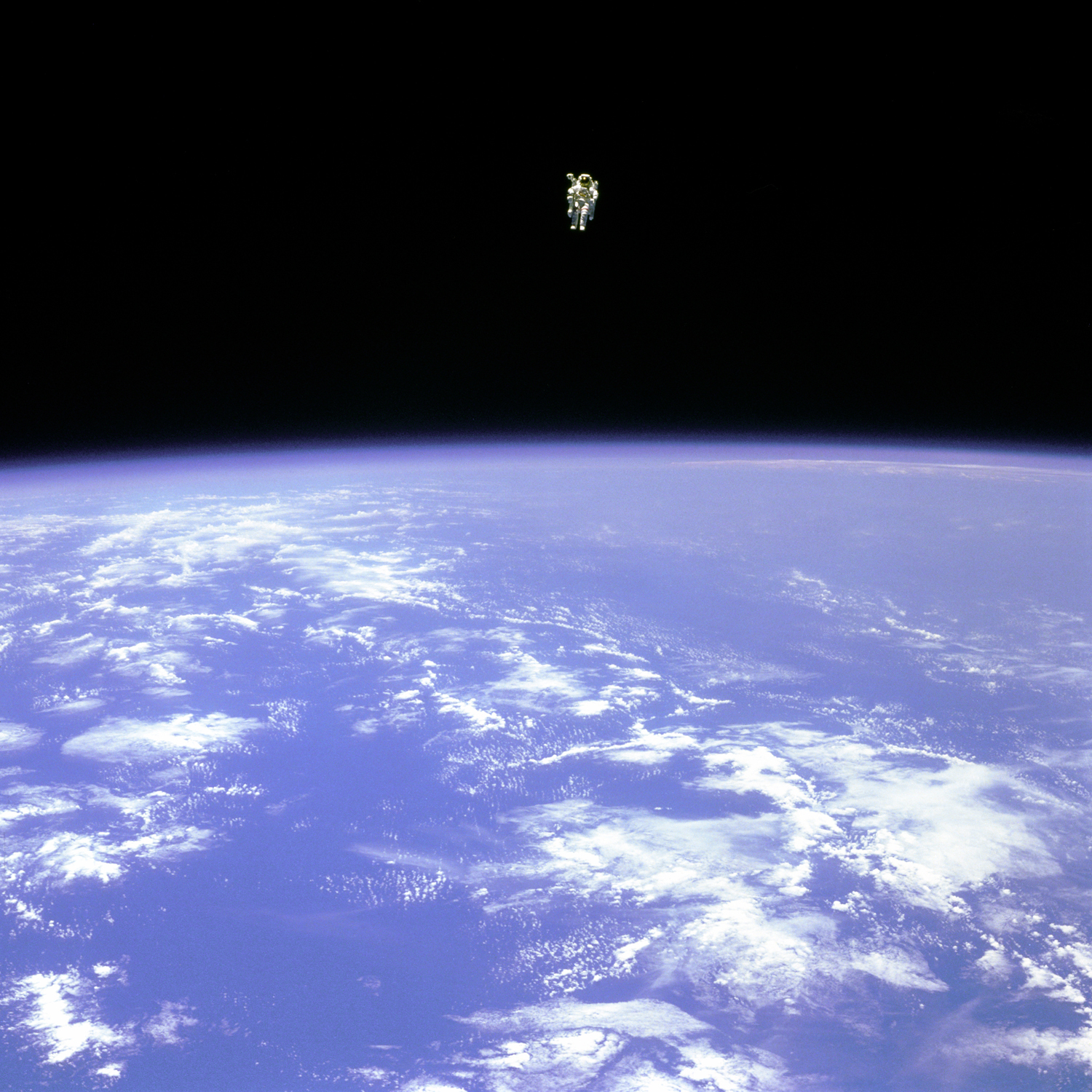
To Fly Free in Space Credit: STS-41B, NASA

Astronomy Picture of the Day

Discover the cosmos! Each day a different image or photograph of our fascinating universe is featured, along with a brief explanation written by a professional astronomer.
2009 September 27
See Explanation.  Clicking on the picture will download
 the highest resolution version available.

Explanation: At about 100 meters from the cargo bay of the space shuttle Challenger, Bruce McCandless II was farther out than anyone had ever been before. Guided by a Manned Maneuvering Unit (MMU), astronaut McCandless, pictured above, was floating free in space. McCandless and fellow NASA astronaut Robert Stewart were the first to experience such an "untethered space walk" during Space Shuttle mission 41-B in 1984. The MMU works by shooting jets of nitrogen and has since been used to help deploy and retrieve satellites. With a mass over 140 kilograms, an MMU is heavy on Earth, but, like everything, is weightless when drifting in orbit. The MMU was replaced with the SAFER backpack propulsion unit.

Eggscruciating! Roberta the hen dies after laying enormous egg Read more: http://www.dailymail.co.uk/news/worldnews/article-1217255/Eggscruciating-Roberta-hen-dies-laying-enormous-egg.html#ixzz0Si1mUUXz

When Chris Schauerman ventured into his chicken coop, the last thing he expected to find was this monster-sized egg.
The farmer, from Honeyoye Falls in upstate New York, was stunned to discover the giant, which weighs in at 138g, nestled among the hay.
The average hen egg weighs between 35g and 77g.
Giant Egg
An Eggs-citing find: The giant, laid in upstate New York, weighs in at 138g
'I just couldn't believe it. You open up the chicken coop and sitting inside the nest with five other eggs is just this behemoth,' he said.
But the discovery was bittersweet for Mr Schauerman - Roberta, the chicken who had laid the egg, died a few hours afterwards.
'I came up to the chicken and I nudged her. She was bar
Farmer Chris Schauerman found the monster-sized egg in his coop

Mr Schauerman went on: 'I was pretty excited when I saw it but also kind of sad because I knew the chicken put forth its last effort to give this egg.'
The egg - christened Little Roberta - is now destined for an omelette of immense proportions.

Read more: http://www.dailymail.co.uk/news/worldnews/article-1217255/Eggscruciating-Roberta-hen-dies-laying-enormous-egg.html#ixzz0Si18VaOt

Iran Freedom Fighters And Dictators

Bookmark and Share